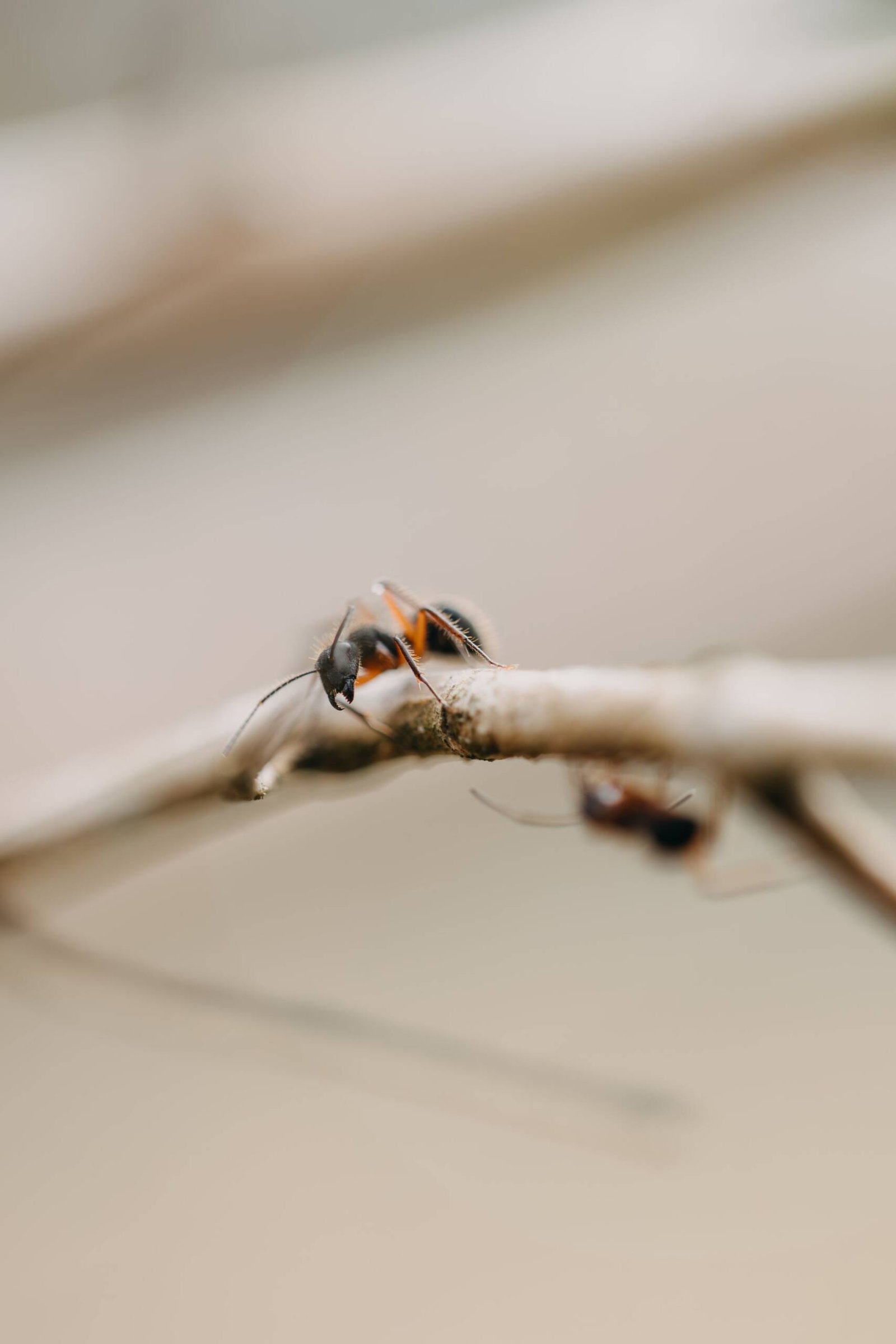
Ants are among the most common insects found around homes, gardens, and natural environments. Although many species look similar at first glance, each has unique features, behaviors, and nesting habits that can help with identification. Learning to recognize different ant species is useful for understanding their behavior and choosing suitable control methods when necessary. By observing their size, color, body shape, trails, and habitat, you can better understand how to identify what ants you’ve got to prevent them easily.
Identify What Ants You’ve Got: Key Characteristics
Spend some time studying the fundamental features to figure out how to identify what ants you’ve got. Start with size, whether they are small, medium, or large. Examine their colour because most ants are in three colours i.e., black, brown, reddish, or yellowish. Consider the body shape and the head, thorax, abdomen, and narrow waist. The waist nodes are typically one or two.
Look at the antennae; they are elbowered in shape. Watch out for their wings too. Reproductive ants are winged and might appear to be different in appearance as compared to the worker ants. It is easy to identify these characteristics by observing them closely, making identification more reliable.
Common Ant Species You Need to Identify
Carpenter Ants
Carpenter ants are generally medium or large, with the usual colour being black, brown, or reddish. They usually nest in wet, or rotting wood. Above all, they do not digest wood, but make tunnels in it. When inspecting these ants, look at the thoraxes and note smooth and rounded thoraxes with only one node at the waist.
Pavement Ants
Pavement ants are tiny dark brown to black ants that are frequent around buildings. They usually nest under paving stones, foundations, and cracks. Hence, they can also have grooves and two waist nodes on their bodies. You can find them trailing behind in search of a sweet or greasy food supply.
Fire Ants
Fire ants are medium, with a darker abdomen, and frequently reddish-brown. They usually construct superficial soil heaps on lawns, gardens and open ground. Their colonies are capable of having lots of workers. When you identify what ants you’ve got, do not refer to only one feature, but to their colour, size, and mode of nesting.
Odorous House Ants
Odorous house ants are small insects that are typically brown or black. They get into buildings when seeking food and moisture. Moreover, they usually leave observable tracks on the wall, floor, and countertop. They can have a strong unpleasant odour when crushed. Note their small size and imbalanced body appearance.
Pharaoh Ants
Pharaoh ants are highly minute and tend to be yellowish or light brown in color, with darker shades appearing towards the abdominal region. They are usually common in warm rooms, such as kitchens, bathrooms, and wall crevices. Hence, they are very small, which makes them hard to point out. They are small in size and have a pale colouration, which can assist in differentiating them from the bigger ants.
Major Nesting Spots for Ants for Inspection
To perform ant control London, it is important to figure out their major nesting locations. You can easily find them in areas where there is access to food, water, shelter, or easy access points. In the exterior portion, check soil, garden beds, tree bases, paving cracks, stones, and foundation. You should also inspect wall cracks, window frames, door frames, cupboards, sinks, bathrooms, and areas under appliances indoors.
Some species may also need damp or damaged wood to provide adequate nesting conditions. Trace over the trails of visible ants, as they can guide you to an opening or nest. Be especially careful around pipes and utility openings, cracks, and concealed areas. By performing frequent observation of these places, it is possible to discover activity even before the settlement of colonies.
Identify What Ants You’ve Got: Warning Signs
Large Numbers of Ants
When there is a large number of ants around, they may be signs of a colony. Look at the areas where they are appearing often. Regular paths around walls, windows, floors, or outside paths can indicate that ants are moving between a nest and a good source of food or water.
Ant Trails Indoors
It is a major alarm when ant trails are regular in a home. Ants tend to stick with scent markings left by other ants, establishing circular paths to food or water. Inspect baseboards, tops and cupboards, windows, and plumbing. These tracks can be used to determine the potential points of entry or the close nesting areas.
Winged Ants Appearing
When winged ants are found indoors, it may be signifying the existence of a mature colony with reproductive ants. These insects can be observed around windows, lights, walls or any other place where they can find a way out. But do not think that all winged insects are ants. Look at the shape of the body, the waist, and the antennae to identify the difference between ants and termites.
Wood Damage or Sawdust
The presence of small piles of wood debris, damaged timber, or hollow-sounding wood can, at times, be a sign of carpenter ant activity. These ants bore holes into wood in order to nest. Examine wet, rotting, or timber that is already damaged. Damage to wood does not necessarily testify to an infestation of ants. If you are unable to handle the severe infestation, hire expert services of ant and insects control.
FAQs: Commonly Asked Questions
1. How can I identify the type of ant in my house?
Look at the size, colour, shape, number of nodes in the waist, and the number of nodes in the antenna. Also, look for the location and behaviour of an ant to identify them professionally.
2. What are the most common ants found in homes?
Common household species include carpenter, pavement, pharaoh, and odorous house ants, although local species vary by region and environment.
3. How do I recognize carpenter ants?
Carpenter ants are rather large and usually black or reddish-black. They often nest in damp or decayed wood near construction sites.
Ready to Stop Guessing Which Ants Are Invading Your Home?
Don’t let tiny ant trails turn into a bigger household problem. If you’re unsure what type of ants you’re seeing, where they’re nesting, or why they keep returning, MVO Pest Control can help identify the problem and recommend an appropriate solution. From carpenter ants around wood to persistent household trails, professional inspection can help target the source rather than just the ants you can see.