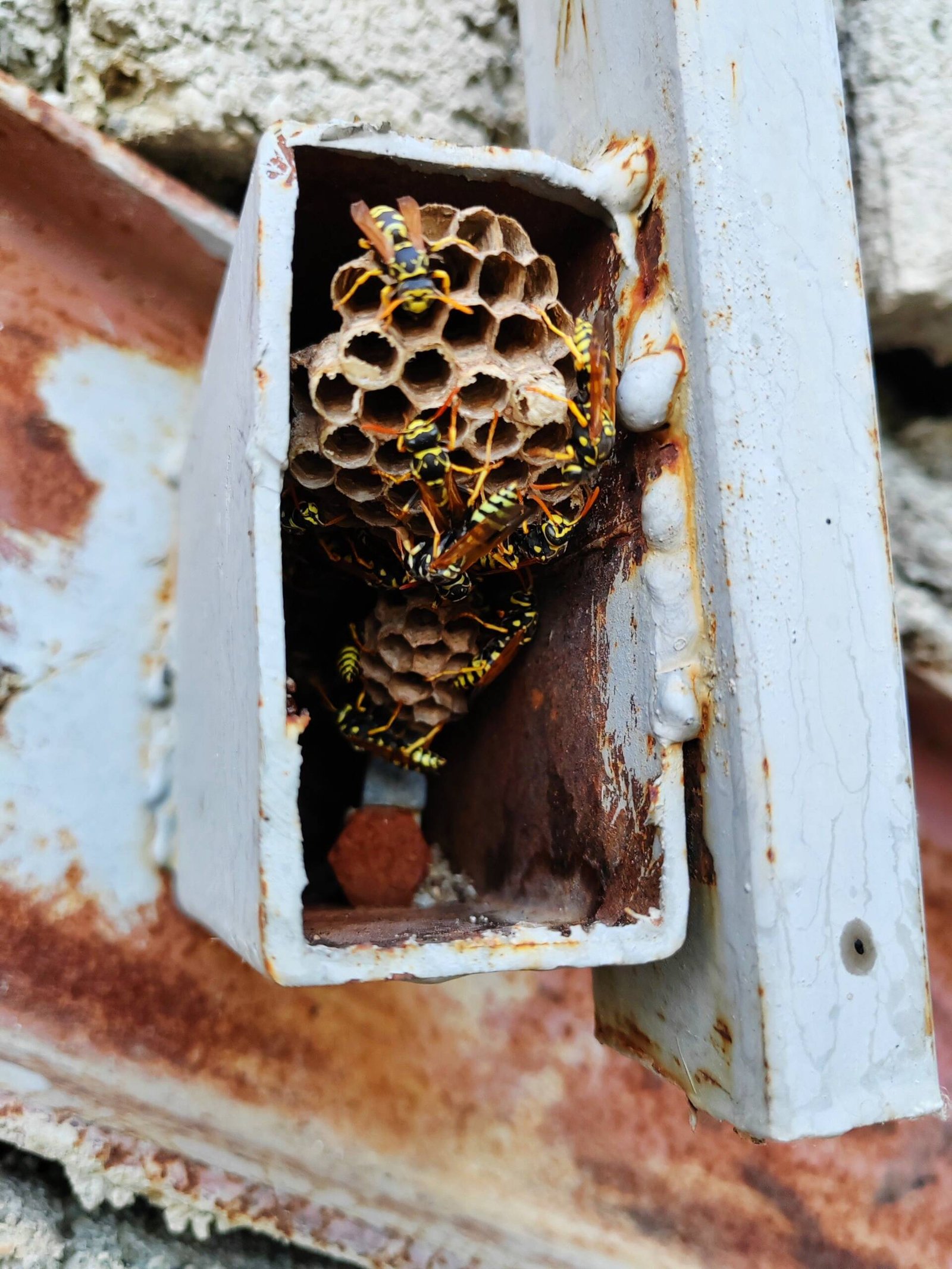
Discovering a wasp nest around your home or business can be unsettling, especially when you know these insects may become aggressive if their nest is disturbed. Nests can appear in eaves, roofs, decks, gutters, trees, wall voids, and other sheltered spaces. Simply killing visible wasps rarely solves the problem, because the nest and colony may remain active nearby, continuing to produce and attract more wasps. This guide explains basic insights about how to kill wasp nest safely by knowing what works and what to avoid.
How to Kill Wasp Nest: Locations to Identify
Prior to making an effort to take out a nest, find its location. Typical places of nesting can be the eaves of a roof, attic, wall holes, sheds, garages, trees, bushes, and under decks. These pests can also construct the nest underground, or in a small hole around the window and door. It is important to look for consistent activity, papery nest material, or an exposed entrance.
There is a strong link between climate change and wasps. They are more active during summer months. When inspecting the nest, care should be taken not to disturb it, as they will become defensive. Inspect the site carefully and stay away in the event that they are more active outside on a hot day. If the nest is not accessible or is buried within a building, then the safest option is to hire a professional pest controller.
Importance of Wasp Nest Inspection Before Killing Them
An inspection process before knowing how to kill wasp nest plays a major role in knowing the location, size, and accessibility. It also assists in determining whether they are getting into the wall, roof, tree, or other concealed places. Upon disturbing a nest, it is obvious that they will attack you in their defense.
Inspection is another way that can assist you in making the safest choice and avoiding risks that are not necessary to people and pets. Search for the high, confined, or inaccessible places that might need professional equipment. It might be possible that you are not able to see the nest clearly, or when you have an inkling that there are numerous nests. In that scenario, call a professional expert of wasp control London On instead of trying to get the nest out on your own.
Steps to Safely Remove a Wasp Nest and Dispose It
Identify the Nesting Locations
Before knowing how to kill wasp nest, it is important to keep an eye on their activity to understand where they are entering and leaving the nest. Do not touch, shake, block, or approach the nest. Know if it is open or concealed within a wall, roof, tree, shed, or other hard-to-reach location.
Keep Kids and Pets Miles Away
Do not start removing the nest in a space that is already confined with the kids and pets. Keep children, pets, and other people out of the area. Seal off nearby windows and doors so they do not enter your home. Do not stand under or next to an active nest.
Select Safe Disposal Methods
While using any product for the removal of a nest, make sure you read the usage instructions and follow the product carefully. Wear appropriate protective garments, and maintain a distance. Do not ever improvise with flammable liquids, homemade mixtures, or any other hazardous substances that may cause injuries or fire.
Remove the Nest Carefully
Removal of an exposed nest should only be done once activity is no longer present and the area is deemed to be safe. Touch the nest with an appropriate tool and proper protective equipment instead of touching it directly. Walls, roof, and other structures should not be pulled to reveal hidden nests, and they should not be pulled by oneself.
Properly Dispose of the Nest
When safely taken out, store the nest in a tough, sealed bag or container as per local waste disposal regulations. Store the unopened contents in a closed container out of sight of children and pets until garbage collection time. Wipe away the nearby vicinity, and keep an eye on them, and their new nest building.
Things to Avoid in a DIY Wasp Nest Removal
Avoid taking unnecessary risks when dealing with a nest. Do not strike, shake, burn, or spray a nest with flammable materials. Above all, do not seal up a hole in a wall, roof, or other building, that leads to a nest of wasps, as they will seek another opening into your house. Do not pull out nests when wearing shorts, sandals, and any other open attire.
Never use ladders in areas around active nests because falls and severe injuries may occur due to sudden attacks by buzzing pests. Keep children and pets out of the area. If the nest may be big, you have a hard time reaching it, or you are allergic to insect bites, do not attempt DIY removal and go for a professional wasp control Cambridge.
How to Prevent Wasp Nests in the Future?
Close Gaps and Openings
Look around your house and identify areas that are open around your windows, doors, rooflines, vents, and pipes. Block all the cracks and holes with mesh materials to minimize the chances of potential nesting and entry areas. Fix broken screens and ensure the vents are adequately covered without inhibiting air circulation, which is required.
Cleanliness of Outdoor Areas
Food, sweetened beverages, rubbish, and other outdoor sources can attract them. Close bins and clean messes. Avoid leaving uncovered food outside for long periods. Wipe down patios and outdoor tables, grill and other food or beverage consumption places on a regular basis.
Maintaining Your Garden
Trim overgrowing bushes, hedges and vegetation frequently around your home. Eliminate needless stacks of timber, garbage and hoarding materials which may offer concealed nesting spots. Maintain a distance between trees and shrubs and the walls or the roof, and check the outdoors periodically to notice initial nests that might be built.
Inspect Your Property
Before small nests grow big, you can notice them by inspecting them regularly. Inspect eaves, sheds, garages, fences, trees, decks, and other covered spaces when performing regular outdoor maintenance. Search in areas of high activity or small nesting sites and treat possible nesting zones as soon and as safely as possible.
Eliminate Sugary Food Items
Anything that wasps are likely to be attracted to around your property should be minimized. It is important to pick up any ripe or fallen fruit from the ground, store sweet foods carefully, and empty rubbish containers frequently. Cover the food when not eating, especially in outdoor areas. These are some of the basic steps that you can follow to ensure that your property is less attractive to foraging buzzing insects.
FAQs: Common Questions People Often Ask
1. Should I knock down a wasp nest?
No. Knocking down an active nest can disturb the colony and increase the risk of aggressive activity.
2. Can wasp nests be inside walls?
Yes. They may build nests inside the hidden areas of a structure, and it is essential to have professionals check to find the nest.
3. Do wasps return after nest removal?
They can return upon getting persistent good nesting conditions. Hence, through inspection, prevention, and monitoring, recurrence can be limited.
Take Back Your Home from Unwanted Wasps
Don’t let a wasp nest turn your yard, deck, or home into a danger zone. MVO Pest Control provides professional removal designed to locate the source. They powerfully treat the infestation, and help prevent future problems. Take advantage of our expert assistance and enjoy your property with greater peace of mind.